Why Would God Loosen the Fevil After 1000 Yr of Hea en on Earth to Stir Up Trohble Again
What happens to our bodies after nosotros dice
(Epitome credit:
Getty Images
)
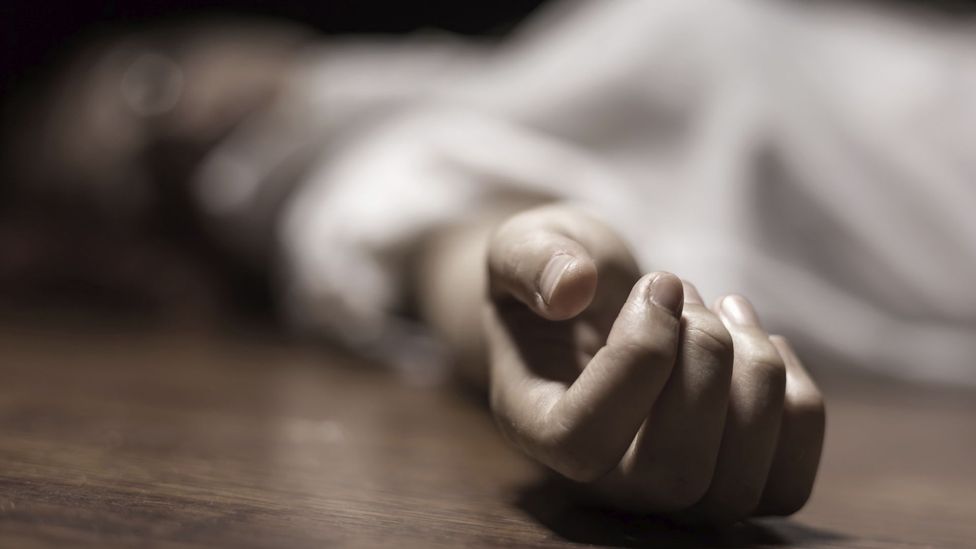
The breakup of our bodies after death tin be fascinating – if you dare to delve into the details. Mo Costandi investigates.
"It might take a little chip of force to break this up," says mortician Holly Williams, lifting John'due south arm and gently bending it at the fingers, elbow and wrist. "Usually, the fresher a body is, the easier it is for me to work on."
Williams speaks softly and has a happy-go-lucky demeanour that belies the nature of her work. Raised and now employed at a family-run funeral home in north Texas, she has seen and handled dead bodies on an almost daily basis since childhood. Now 28 years former, she estimates that she has worked on something similar i,000 bodies.
Her work involves collecting recently deceased bodies from the Dallas–Fort Worth surface area and preparing them for their funeral.
"Most of the people we pick up dice in nursing homes," says Williams, "but sometimes we go people who died of gunshot wounds or in a abandoned vehicle. We might get a telephone call to selection upward someone who died lone and wasn't establish for days or weeks, and they'll already be decomposing, which makes my work much harder."
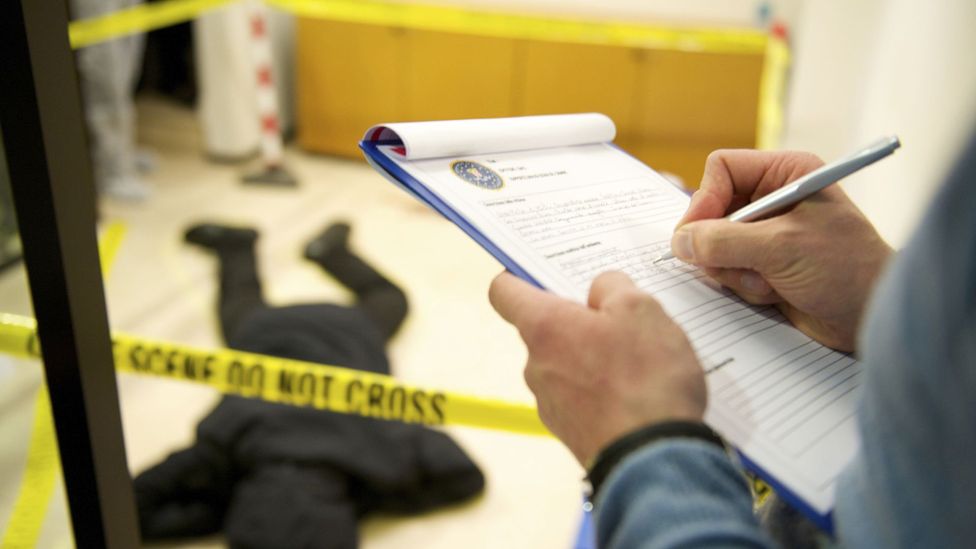
John had been dead well-nigh four hours before his trunk was brought into the funeral home. He had been relatively healthy for most of his life. He had worked his whole life on the Texas oil fields, a job that kept him physically active and in pretty skillful shape. He had stopped smoking decades earlier and drank booze moderately. So, i cold January morning time, he suffered a massive center assail at home (apparently triggered by other, unknown, complications), fell to the flooring, and died nigh immediately. He was simply 57.
Now, John lay on Williams' metallic table, his body wrapped in a white linen sheet, cold and stiff to the touch, his peel purplish-grey – tell-tale signs that the early stages of decomposition were well under way.
Self-digestion
Far from being 'dead', a rotting corpse is teeming with life. A growing number of scientists view a rotting corpse equally the cornerstone of a vast and complex ecosystem, which emerges soon subsequently expiry and flourishes and evolves every bit decomposition gain.
Decomposition begins several minutes afterwards death with a procedure called autolysis, or self-digestion. Soon later the center stops beating, cells become deprived of oxygen, and their acerbity increases as the toxic by-products of chemical reactions brainstorm to accumulate inside them. Enzymes first to assimilate cell membranes and so leak out as the cells break downward. This usually begins in the liver, which is rich in enzymes, and in the encephalon, which has loftier water content. Eventually, though, all other tissues and organs begin to interruption downwardly in this way. Damaged blood cells begin to spill out of broken vessels and, aided past gravity, settle in the capillaries and minor veins, discolouring the skin.
Torso temperature also begins to drop, until it has acclimatised to its surroundings. Then, rigor mortis – "the stiffness of death" – sets in, starting in the eyelids, jaw and neck muscles, before working its style into the trunk and so the limbs. In life, muscle cells contract and relax due to the actions of 2 filamentous proteins (actin and myosin), which slide forth each other. Afterwards expiry, the cells are depleted of their energy source and the protein filaments become locked in place. This causes the muscles to become rigid and locks the joints.
(Credit: Science Photo Library)
During these early stages, the cadaveric ecosystem consists generally of the bacteria that alive in and on the living human trunk. Our bodies host huge numbers of bacteria; every one of the body's surfaces and corners provides a habitat for a specialised microbial customs. By far the largest of these communities resides in the gut, which is home to trillions of bacteria of hundreds or perhaps thousands of different species.
The gut microbiome is one of the hottest research topics in biology; it's been linked to roles in man health and a plethora of weather condition and diseases, from autism and low to irritable bowel syndrome and obesity. Only we still know footling about these microbial passengers while we are alive. We know even less virtually what happens to them when we dice.
Immune shutdown
In Baronial 2014, forensic scientist Gulnaz Javan of Alabama Country University in Montgomery and her colleagues published the very starting time study of what they have chosen the thanatomicrobiome (from thanatos, the Greek word for 'death').
"Many of our samples come up from criminal cases," says Javan. "Someone dies by suicide, homicide, drug overdose or traffic blow, and I collect tissue samples from the torso. In that location are ethical issues [because] we demand consent."
Near internal organs are devoid of microbes when we are alive. Soon after death, even so, the immune organization stops working, leaving them to spread throughout the body freely. This usually begins in the gut, at the junction between the minor and big intestines. Left unchecked, our gut bacteria begin to digest the intestines – and so the surrounding tissues – from the inside out, using the chemical cocktail that leaks out of damaged cells as a food source. Then they invade the capillaries of the digestive arrangement and lymph nodes, spreading starting time to the liver and spleen, then into the middle and brain.
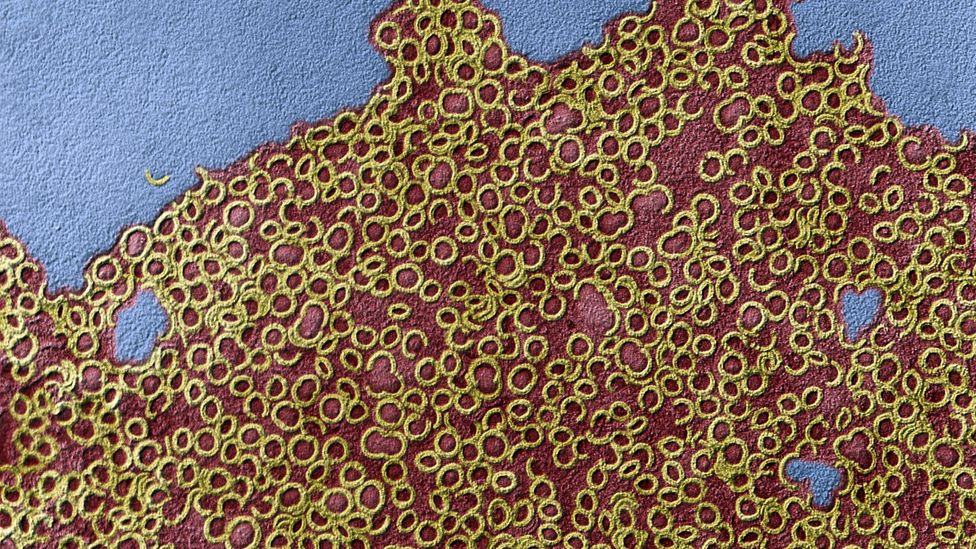
Bacteria convert the haemoglobin in blood into sulfhaemoglobin (Credit: Scientific discipline Photo Library)
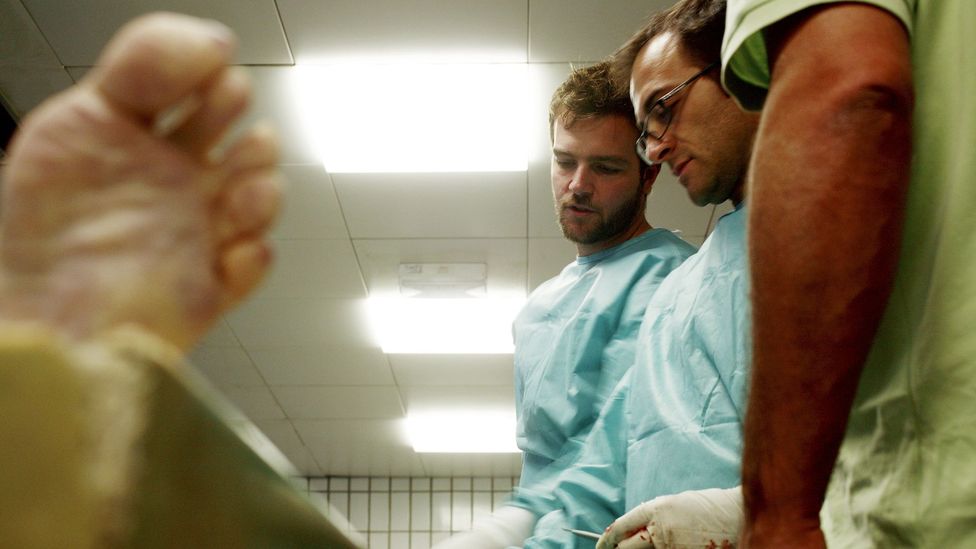
Javan and her team took samples of liver, spleen, brain, heart and blood from xi cadavers, at between twenty and 240 hours after decease. They used two different land-of-the-art Dna sequencing technologies, combined with bioinformatics, to analyse and compare the bacterial content of each sample.
The samples taken from different organs in the aforementioned cadaver were very similar to each other but very dissimilar from those taken from the same organs in the other bodies. This may be due partly to differences in the composition of the microbiome of each cadaver, or it might be caused by differences in the fourth dimension elapsed since death. An earlier study of decomposing mice revealed that although the microbiome changes dramatically afterwards expiry, it does so in a consistent and measurable mode. The researchers were able to estimate time of death to within three days of a nearly ii-month period.
Bacteria checklist
Javan's study suggests that this 'microbial clock' may be ticking within the decomposing human body, too. Information technology showed that the bacteria reached the liver about 20 hours subsequently death and that it took them at least 58 hours to spread to all the organs from which samples were taken. Thus, later nosotros die, our bacteria may spread through the body in a systematic way, and the timing with which they infiltrate first i internal organ and then another may provide a new way of estimating the corporeality of time that has elapsed since death.
"After death the composition of the leaner changes," says Javan. "They move into the centre, the encephalon then the reproductive organs concluding." In 2014, Javan and her colleagues secured a $200,000 (£131,360) grant from the National Science Foundation to investigate further. "We volition do adjacent-generation sequencing and bioinformatics to see which organ is best for estimating [time of death] – that'southward still unclear," she says.
I thing that does seem clear, however, is that a different composition of bacteria is associated with different stages of decomposition.
The microbiome of bacteria changes with each hour later death (Credit: Getty Images)
But what does this process really look similar?
Scattered amongst the pine trees in Huntsville, Texas, lie effectually half a dozen human cadavers in various stages of decay. The two most recently placed bodies are spread-eagled near the center of the small enclosure with much of their loose, gray-blue mottled skin still intact, their ribcages and pelvic bones visible between slowly putrefying flesh. A few metres away lies another, fully skeletonised, with its blackness, hardened pare clinging to the bones, as if it were wearing a shiny latex suit and skullcap. Further still, across other skeletal remains scattered by vultures, lies a third body within a wood and wire muzzle. It is nearing the end of the death bicycle, partly mummified. Several large, chocolate-brown mushrooms grow from where an belly in one case was.
Natural decay
For about of us the sight of a rotting corpse is at all-time unsettling and at worst repulsive and frightening, the stuff of nightmares. Merely this is everyday for the folks at the Southeast Texas Practical Forensic Science Facility. Opened in 2009, the facility is located within a 247-acre surface area of national forest owned by Sam Houston State University (SHSU). Within it, a ix-acre plot of densely wooded land has been sealed off from the wider area and further subdivided, by 10-foot-loftier dark-green wire fences topped with spinous wire.
In belatedly 2011, SHSU researchers Sibyl Bucheli and Aaron Lynne and their colleagues placed two fresh cadavers here, and left them to decay under natural conditions.
Once self-digestion is under way and bacteria have started to escape from the alimentary canal, putrefaction begins. This is molecular death – the breakup of soft tissues fifty-fifty farther, into gases, liquids and salts. It is already nether manner at the earlier stages of decomposition but really gets going when anaerobic bacteria get in on the act.
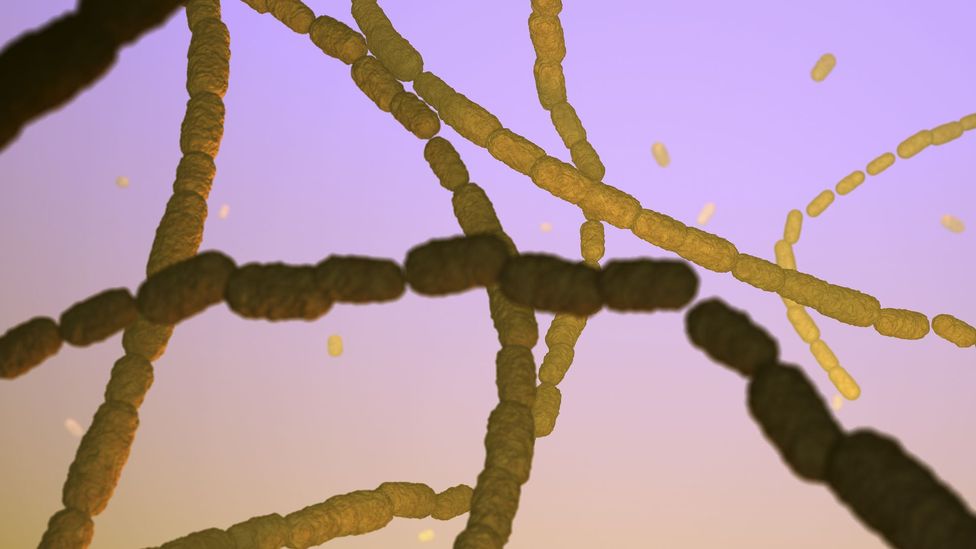
Every expressionless body is likely to have its own unique microbial signature (Credit: Scientific discipline Photograph Library)
Putrefaction is associated with a marked shift from aerobic bacterial species, which require oxygen to abound, to anaerobic ones, which practice not. These and then feed on the body'southward tissues, fermenting the sugars in them to produce gaseous by-products such as methane, hydrogen sulphide and ammonia, which accumulate within the body, inflating (or 'bloating') the abdomen and sometimes other body parts.
This causes further discolouration of the body. As damaged blood cells proceed to leak from disintegrating vessels, anaerobic bacteria convert haemoglobin molecules, which once carried oxygen effectually the body, into sulfhaemoglobin. The presence of this molecule in settled blood gives skin the marbled, greenish-black appearance characteristic of a trunk undergoing active decomposition.
Specialised habitat
As the gas force per unit area continues to build up inside the trunk, it causes blisters to appear all over the skin surface. This is followed by loosening, then 'slippage', of big sheets of skin, which remain barely fastened to the deteriorating frame underneath. Eventually, the gases and liquefied tissues purge from the body, ordinarily leaking from the anus and other orifices and frequently as well leaking from ripped peel in other parts of the torso. Sometimes, the pressure is and then great that the abdomen bursts open up.
Bloating is often used equally a mark for the transition between early and subsequently stages of decomposition, and another contempo study shows that this transition is characterised by a distinct shift in the composition of cadaveric bacteria.
Bucheli and Lynne took samples of bacteria from various parts of the bodies at the kickoff and the end of the bloat phase. They then extracted bacterial DNA from the samples and sequenced it.
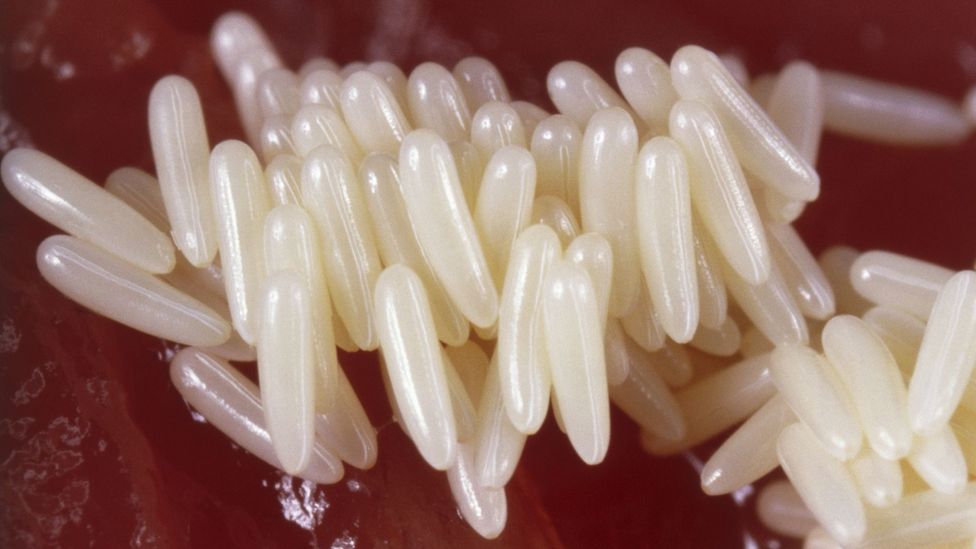
Flies lay eggs on a cadaver in the hours after death, either in orifices or open up wounds (Credit: Science Photo Library)
As an entomologist, Bucheli is mainly interested in the insects that colonise cadavers. She regards a cadaver as a specialised habitat for various necrophagous (or 'dead-eating') insect species, some of which see out their entire life cycle in, on and around the body.
When a decomposing body starts to purge, information technology becomes fully exposed to its environs. At this stage, the cadaveric ecosystem really comes into its own: a 'hub' for microbes, insects and scavengers.
Maggot cycle
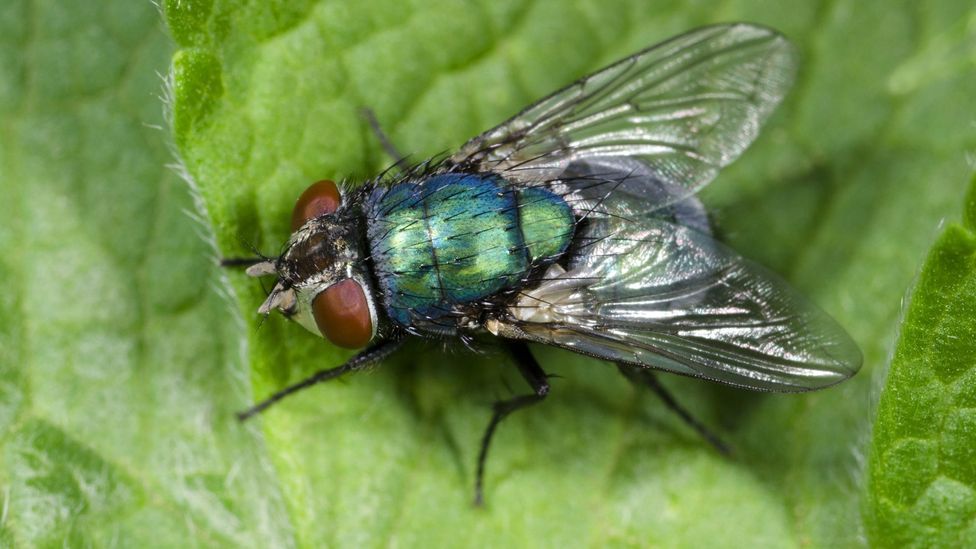
Two species closely linked with decomposition are blowflies and flesh flies (and their larvae). Cadavers requite off a foul, sickly-sweet smell, made upwards of a circuitous cocktail of volatile compounds which changes as decomposition progresses. Blowflies observe the odour using specialised receptors on their antennae, then country on the cadaver and lay their eggs in orifices and open wounds.
Each fly deposits around 250 eggs that hatch within 24 hours, giving rising to pocket-size first-phase maggots. These feed on the rotting flesh and and so moult into larger maggots, which feed for several hours earlier moulting again. After feeding some more, these yet larger, and now fattened, maggots wriggle away from the body. They then pupate and transform into adult flies, and the cycle repeats until there's aught left for them to feed on.
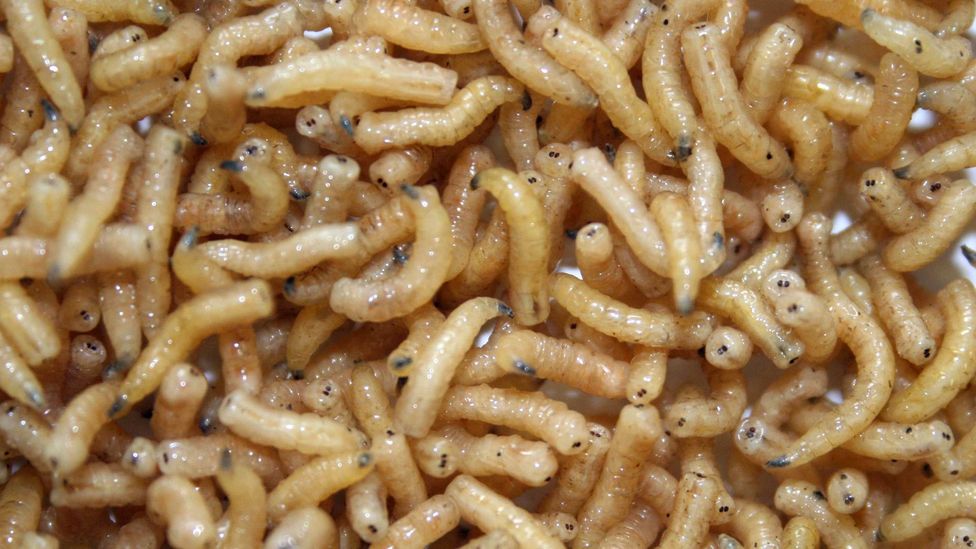
Wriggling maggots generate an enormous corporeality of oestrus inside the body (Credit: Science Photograph Library)
Nether the right weather condition, an actively decomposable torso will accept large numbers of stage-three maggots feeding on it. This 'maggot mass' generates a lot of heat, raising the inside temperature by more than 10C (18F). Similar penguins huddling in the South Pole, individual maggots within the mass are constantly on the move. But whereas penguins huddle to proceed warm, maggots in the mass move around to stay cool.
"It'southward a double-edged sword," Bucheli explains, surrounded by large toy insects and a drove of Monster High dolls in her SHSU office. "If y'all're ever at the border, you lot might go eaten by a bird, and if you're always in the centre, you might get cooked. So they're constantly moving from the centre to the edges and back."
The presence of flies attracts predators such as skin beetles, mites, ants, wasps and spiders, which and then feed on the flies' eggs and larvae. Vultures and other scavengers, as well as other large meat-eating animals, may also descend upon the trunk.
Unique repertoire
In the absenteeism of scavengers, though, the maggots are responsible for removal of the soft tissues. As Carl Linnaeus (who devised the system by which scientists name species) noted in 1767, "three flies could swallow a equus caballus cadaver equally quickly as a lion". Tertiary-stage maggots will move away from a cadaver in large numbers, often following the aforementioned route. Their activity is then rigorous that their migration paths may be seen after decomposition is finished, as deep furrows in the soil emanating from the cadaver.
Every species that visits a cadaver has a unique repertoire of gut microbes, and different types of soil are probable to harbour distinct bacterial communities – the composition of which is probably determined by factors such as temperature, moisture, and the soil type and texture.
(Credit: Scientific discipline Photo Library)
All these microbes mingle and mix within the cadaveric ecosystem. Flies that land on the cadaver volition not only eolith their eggs on it, but will also have upwards some of the bacteria they observe in that location and leave some of their own. And the liquefied tissues seeping out of the body permit the exchange of bacteria between the cadaver and the soil beneath.
When they take samples from cadavers, Bucheli and Lynne detect leaner originating from the peel on the body and from the flies and scavengers that visit it, likewise as from soil. "When a body purges, the gut bacteria get-go to come out, and we see a greater proportion of them exterior the trunk," says Lynne.
Thus, every expressionless body is likely to take a unique microbiological signature, and this signature may modify with time according to the exact conditions of the death scene. A better understanding of the composition of these bacterial communities, the relationships between them and how they influence each other as decomposition proceeds could i twenty-four hour period help forensics teams learn more about where, when and how a person died.
Pieces of the puzzle
For instance, detecting DNA sequences known to be unique to a particular organism or soil blazon in a cadaver could help law-breaking scene investigators link the body of a murder victim to a detail geographical location or narrow down their search for clues even further, peradventure to a specific field inside a given area.
"In that location have been several courtroom cases where forensic entomology has really stood up and provided important pieces of the puzzle," says Bucheli, adding that she hopes bacteria might provide additional information and could become some other tool to refine time-of-death estimates. "I hope that in about five years we can first using bacterial information in trials," she says.
To this stop, researchers are busy cataloguing the bacterial species in and on the human being torso, and studying how bacterial populations differ between individuals. "I would honey to have a dataset from life to decease," says Bucheli. "I would love to meet a donor who'd let me take bacterial samples while they're alive, through their death process and while they decompose."
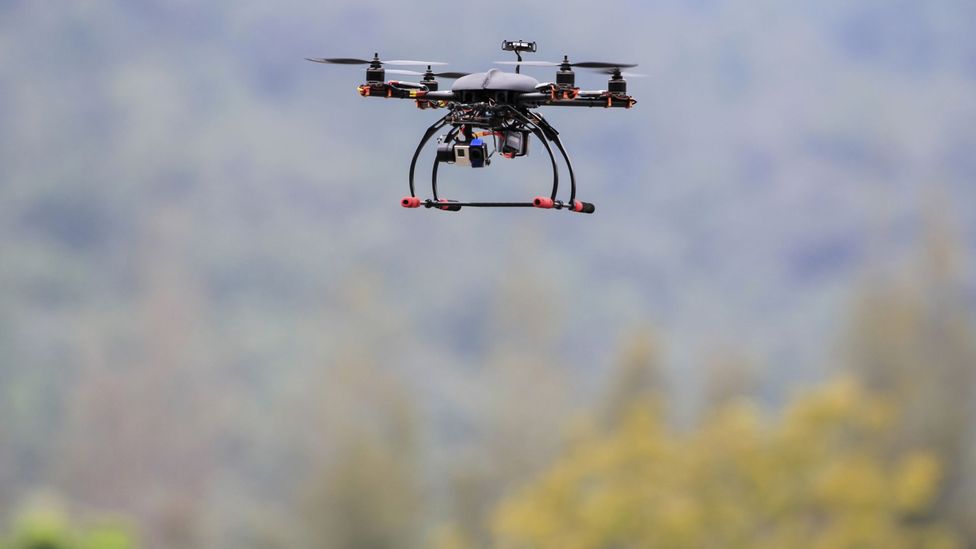
Drones could be used to find cached bodies by analysing soil (Credit: Getty Images)
"We're looking at the purging fluid that comes out of decomposing bodies," says Daniel Wescott, manager of the Forensic Anthropology Heart at Texas State Academy in San Marcos.
Wescott, an anthropologist specialising in skull construction, is using a micro-CT scanner to analyse the microscopic structure of the bones brought dorsum from the trunk farm. He too collaborates with entomologists and microbiologists – including Javan, who has been busy analysing samples of cadaver soil nerveless from the San Marcos facility – as well as figurer engineers and a pilot, who operate a drone that takes aerial photographs of the facility.
"I was reading an commodity about drones flying over crop fields, looking at which ones would be best to plant in," he says. "They were looking at near-infrared, and organically rich soils were a darker color than the others. I idea if they tin can do that, and so maybe we can pick up these little circles."
Rich soil
Those "fiddling circles" are cadaver decomposition islands. A decomposing body significantly alters the chemistry of the soil below it, causing changes that may persist for years. Purging – the seeping of broken-down materials out of what's left of the torso – releases nutrients into the underlying soil, and maggot migration transfers much of the energy in a body to the wider environment.
Eventually, the whole process creates a 'cadaver decomposition island', a highly concentrated surface area of organically rich soil. As well as releasing nutrients into the wider ecosystem, this attracts other organic materials, such as expressionless insects and faecal matter from larger animals.
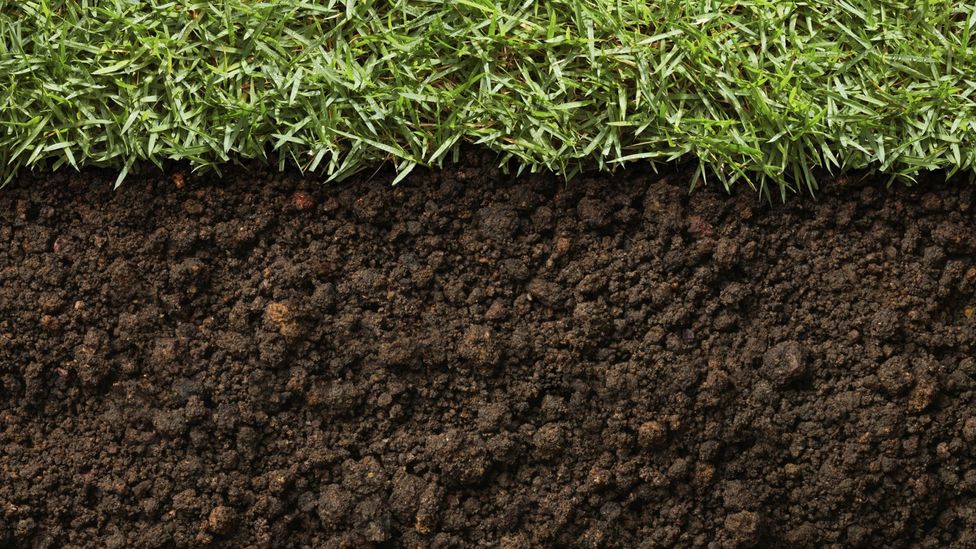
According to one estimate, an boilerplate human torso consists of 50–75% water, and every kilogram of dry out body mass eventually releases 32g of nitrogen, 10g of phosphorous, 4g of potassium and 1g of magnesium into the soil. Initially, it kills off some of the underlying and surrounding vegetation, possibly considering of nitrogen toxicity or because of antibiotics found in the body, which are secreted by insect larvae equally they feed on the flesh. Ultimately, though, decomposition is beneficial for the surrounding ecosystem.
A dead body's minerals continue to leach into soil months afterward expiry (Credit: Getty Images)
The microbial biomass within the cadaver decomposition isle is greater than in other nearby areas. Nematode worms, associated with decay and drawn to the seeping nutrients, become more than abundant, and plant life becomes more various. Further enquiry into how decomposing bodies alter the ecology of their surroundings may provide a new way of finding murder victims whose bodies have been buried in shallow graves.
Grave soil analysis may likewise provide another possible mode of estimating fourth dimension of death. A 2008 study of the biochemical changes that have place in a cadaver decomposition isle showed that the soil concentration of lipid-phosphorous leaking from a cadaver peaks at around xl days afterwards death, whereas those of nitrogen and extractable phosphorous peak at 72 and 100 days, respectively. With a more detailed understanding of these processes, analyses of grave soil biochemistry could one twenty-four hour period help forensic researchers to estimate how long ago a body was placed in a hidden grave.
This is an edited version of an article originally published past Mosaic, and is reproduced under a Creative Commons licence. For more than about the issues effectually this story, visit Mosaic'southward website here.
Share this story on Facebook , Google+ or Twitter .
aldridgewholing94.blogspot.com
Source: https://www.bbc.com/future/article/20150508-what-happens-after-we-die
0 Response to "Why Would God Loosen the Fevil After 1000 Yr of Hea en on Earth to Stir Up Trohble Again"
Post a Comment